
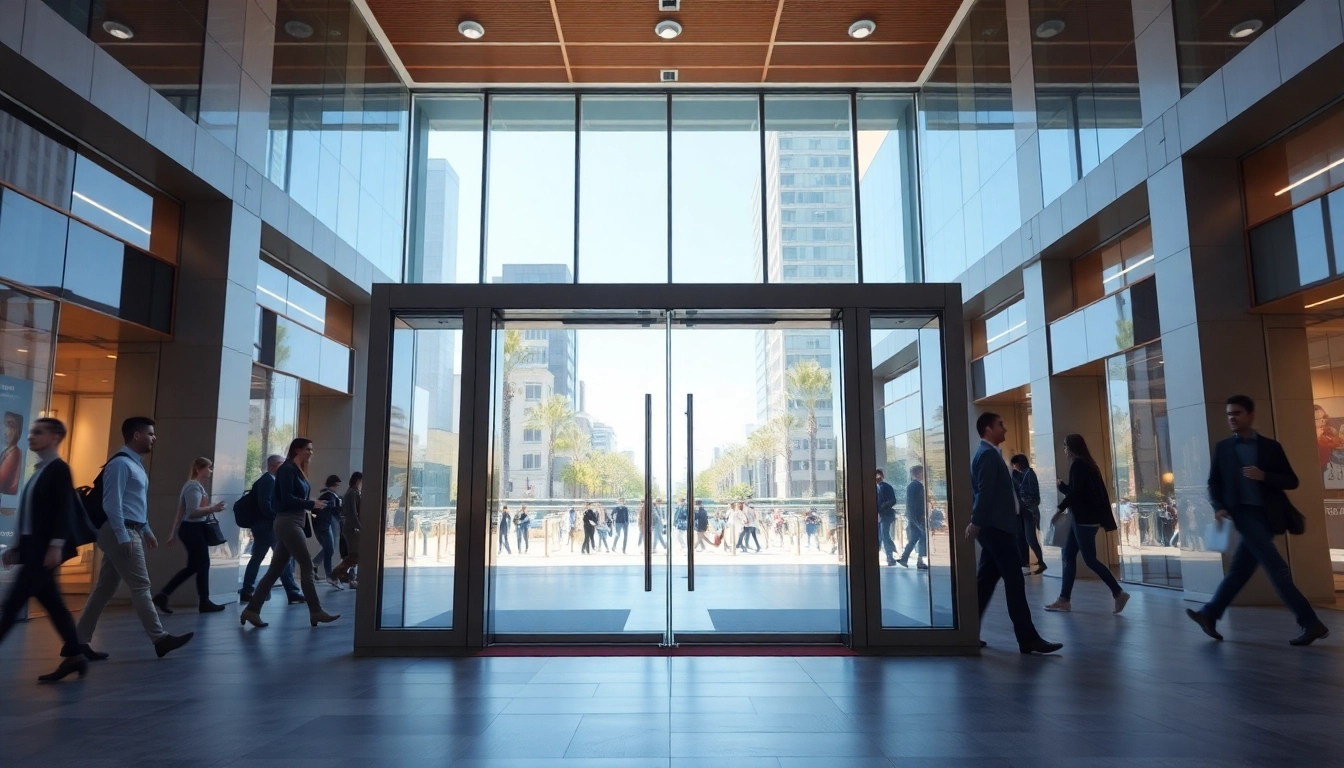

Introduction to Commercial Automatic Doors
Commercial automatic doors have become a staple in modern architecture, merging functionality with aesthetic appeal. These doors not only enhance accessibility but also provide significant advantages in terms of energy efficiency and security. Designed to seamlessly open and close based on user proximity, Commercial Automatic Doors come equipped with various advanced technologies that cater to a wide array of environments, from hospitals to retail spaces.
What are Commercial Automatic Doors?
Commercial automatic doors are self-operating doors that utilize sensor technology to open and close automatically as individuals approach. These doors can be powered by electric or battery systems and are engineered for frequent use in high-traffic areas. The operational technology often includes infrared sensors, motion detectors, and pressure sensors, ensuring that the doors function reliably under various conditions.
Benefits of Using Commercial Automatic Doors
The introduction of Commercial Automatic Doors offers numerous benefits:
1. Enhanced Accessibility: Automatic doors provide easier access for individuals with disabilities, elderly people, and those burdened with packages, ensuring compliance with regulatory standards like the Americans with Disabilities Act (ADA).
2. Energy Efficiency: By reducing the air exchange between indoor and outdoor environments, these doors help maintain stable interior temperatures, thus lowering heating and cooling costs.
3. Improved Security: Commercial automatic doors can be integrated with access control systems such as card readers, enhancing overall building security.
4. Aesthetic Appeal: Available in various designs, colors, and materials, these doors can enhance the visual appeal of a business.
5. Convenience: They offer a touchless entry option, improving hygiene, especially in high-traffic areas like hospitals or supermarkets.
Common Applications of Commercial Automatic Doors
Commercial automatic doors are utilized in numerous settings, including:
– Retail Stores: To provide seamless entry and improve customer experiences.
– Hospitals and Medical Centers: For accessibility and infection control.
– Office Buildings: Enhancing security and providing a modern look.
– Airports: Facilitating large volumes of passenger foot traffic.
– Hotels: To ensure guest convenience and accessibility.
Types of Commercial Automatic Doors
Understanding the different types of Commercial Automatic Doors is crucial for selecting the most suitable option for your needs.
Sliding Automatic Doors
Sliding automatic doors are commonly found in retail and commercial environments due to their space-saving design. These doors slide open horizontally, allowing for a wide entryway without requiring additional clearance space.
Key Features:
– Space Efficiency: Ideal for areas where floor space is limited.
– High Traffic Management: Can accommodate large volumes of people without jamming.
Considerations:
– Installation requires proper alignment to ensure reliable operation.
– Needs regular maintenance to keep the track clear of debris.
Revolving Automatic Doors
Revolving doors are often used in high-traffic areas due to their unique design that enables a continuous flow of people. They prevent drafts, maintain climate control, and enhance security.
Key Features:
– Energy Savings: They minimize air loss, providing efficient insulation.
– Pedestrian Control: Effective for managing heavy foot traffic.
Considerations:
– May require additional space for the revolving mechanism.
– Persons with disabilities may require assistance due to the design.
Folding Automatic Doors
Folding automatic doors blend the best aspects of sliding and swinging doors. They are ideal for large entryways and can open wide to allow maximum access while occupying minimum space when closed.
Key Features:
– Versatility: Can be customized to fit various entrance sizes.
– Aesthetic Appeal: Offers a modern look while being functional.
Considerations:
– Complexity in installation might lead to higher upfront costs.
– Requires regular checks to ensure mechanisms are functioning smoothly.
Key Features to Consider
When selecting Commercial Automatic Doors, several critical features should be evaluated to ensure optimal functionality and fit.
Safety and Security Features
Safety and security are paramount for any commercial establishment. Automatic doors can be equipped with:
– Motion Sensors: Detects presence and prevents accidents during door operation.
– Manual Override Options: Allows for manual operation in case of sensor failure.
– Safety Edges: These are pressure-sensitive edges that stop the door from closing if an obstruction is detected.
Energy Efficiency and Sustainability
With rising energy costs and an increasing focus on sustainability, it’s essential to choose energy-efficient doors.
Features to Consider:
– Thermal insulation materials can help reduce heating and cooling expenses.
– Doors with automatic close features can minimize energy loss.
Employing automatic systems that align with sustainable practices not only benefits your bottom line but also appeals to environmentally conscious consumers.
Customization Options for Your Needs
Customization can significantly impact the function and aesthetics of your Commercial Automatic Doors. Businesses can select:
– Dimensions: Ensure doors fit appropriately within architectural designs.
– Finishes and Colors: Match doors with branding or existing décor.
– Technological Integration: Include smart technologies like touchless entry systems or integration with surveillance systems.
Installation and Maintenance
Proper installation and maintenance will maximize the lifespan and efficiency of your Commercial Automatic Doors.
Professional Installation Process
Installing Commercial Automatic Doors requires professional expertise to ensure they function correctly. The installation process typically involves:
1. Site Assessment: Evaluating the area where the doors will be installed.
2. Electrical Setup: Ensuring power supply and sensor placement is optimal.
3. Final Adjustments: Making necessary tweaks and calibrations for smooth operation.
Maintenance Tips for Longevity
To maintain the functionality of your Commercial Automatic Doors, regular maintenance is crucial. Here are some tips:
– Routine Checks: Inspect sensors and mechanical parts regularly for wear and tear.
– Cleaning: Keep the door tracks clear of debris and dirt.
– Lubrication: Apply lubricant to moving parts to ensure smooth operation.
Common Issues and Troubleshooting
Even well-maintained Commercial Automatic Doors may encounter issues. Common problems include:
– Doors Not Opening: Check sensor functionality and alignment.
– Strange Noises: Inspect for debris in tracks or lack of lubrication.
– Doors Closing Unexpectedly: This could indicate a malfunctioning sensor.
Having a troubleshooting guide and regular maintenance schedule can significantly alleviate most common issues.
FAQs about Commercial Automatic Doors
How do commercial automatic doors work?
Commercial automatic doors operate using sensors and control systems that detect motion and allow for seamless entry and exit.
Are commercial automatic doors energy efficient?
Yes, many automatic doors feature energy-efficient designs that help minimize heating and cooling costs by reducing air exchange.
What are the safety features of commercial automatic doors?
Common safety features include motion sensors, manual override options, and safety edges to prevent accidents during operation.
Can commercial automatic doors be customized?
Absolutely! They can be customized to fit specific dimensions, designs, and functionalities suited to the building’s requirements.
What maintenance do commercial automatic doors need?
Regular maintenance includes checking sensors, lubricating moving parts, and ensuring the door tracks are clear and functioning properly.