
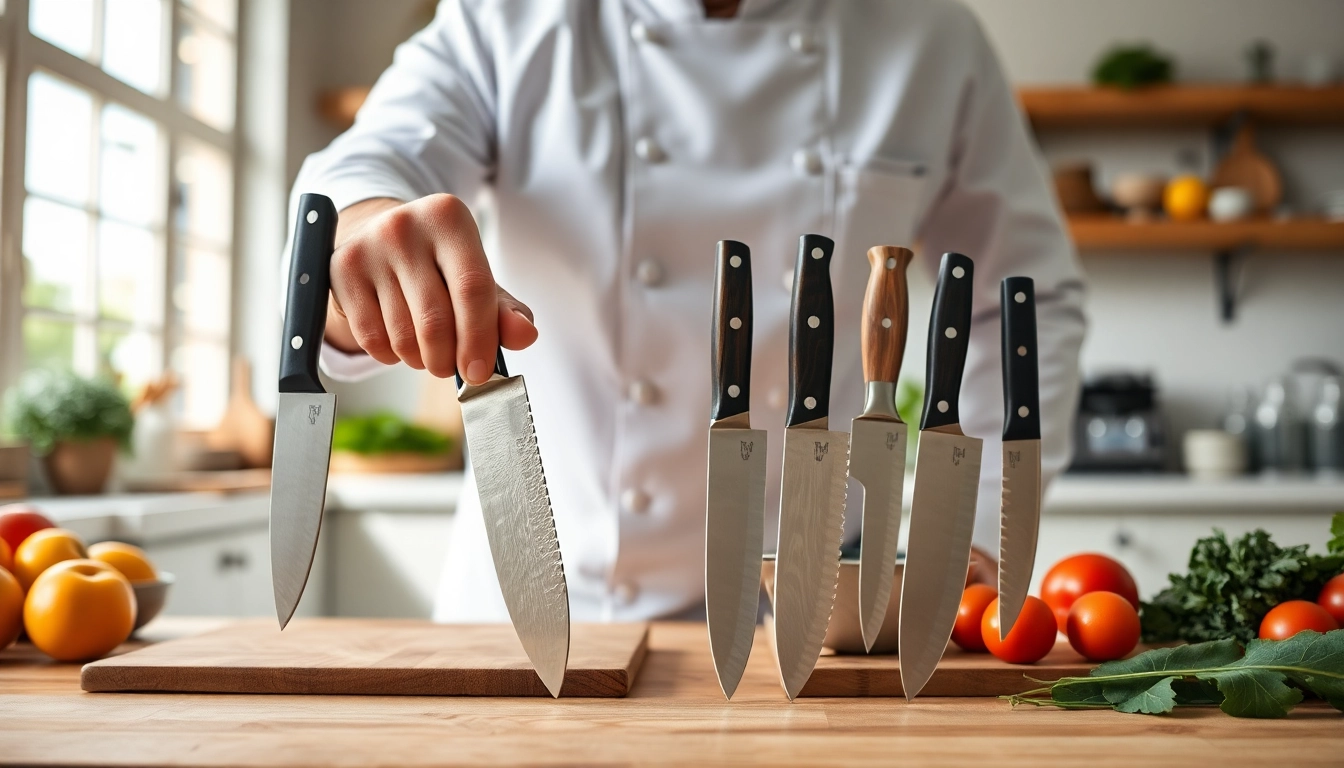

Understanding the Basics of Chef Knives
What is a Chef Knife?
A chef knife, also known as a cook’s knife, is an essential tool in the kitchen that is designed for a variety of cutting tasks, from chopping vegetables to slicing meat. Typically ranging from 6 to 12 inches in length, its versatility makes it a staple for both professional chefs and home cooks alike. The broad blade allows for a rocking motion during chopping, while the length aids in smooth, uninterrupted cuts. Understanding what a chef knife is and its importance in the culinary world is the first step in learning how to choose a chef’s knife.
Common Types and Their Uses
While all chef knives share a common design, there are variations that cater to different culinary needs. Here are some common types:
- French Chef Knife: Known for its curved blade, this type excels in a rocking motion perfect for chopping herbs or dicing onions.
- German Chef Knife: Slightly heavier with a broader blade, it’s excellent for tasks requiring a bit more heft, such as cutting through thick squash.
- Santoku Knife: With a flatter blade and smaller size, it provides excellent precision for delicate tasks like mincing garlic or fine slicing.
Important Features to Consider
When selecting a chef knife, consider blade material, handle design, weight, and balance. Steel composition can significantly influence performance and longevity, while the comfort of the handle can affect how well you wield the knife over time. A well-balanced knife helps reduce fatigue during extended use, making it an important feature for both novice and experienced cooks.
Key Factors on How to Choose a Chef’s Knife
Blade Material and Construction
The material of the blade determines its sharpness, durability, and ease of maintenance. Common materials include:
- Stainless Steel: Resistant to rust and staining, it’s known for easy maintenance.
- High-Carbon Steel: Offers superior sharpness and edge retention but requires more care to avoid rust.
- Damascus Steel: Known for its aesthetic patterns and exceptional performance; it combines hardness with flexibility.
Understanding these materials helps you make a more informed decision based on your cooking style and preferences.
Handle Comfort and Design
The handle of a chef knife plays a crucial role in your comfort during use. A well-designed handle can ensure a firm grip, thus reducing the chances of slippage or accidents. When evaluating handle materials, consider varieties such as:
- Wood: Provides warmth and comfort but may require more upkeep.
- Plastic: Often more affordable and easy to clean but can be less durable.
- Composite: Combines the best of both worlds; sturdy and easy to maintain.
Choose a handle that fits comfortably in your hand and supports your grip style to enhance your cooking experience.
Weight and Balance Considerations
Every chef has a preference regarding the weight of their knife. A lighter knife may allow for quicker, more agile movements, while a heavier knife can provide more force during cuts. Similarly, the balance of the knife, which refers to the distribution of weight between the blade and the handle, is vital for overall control. When testing knives, feel for a point of balance that allows for effortless maneuvering to help you decide what feels right.
Testing and Evaluating Chef Knives
How to Properly Hold a Chef Knife
The way you hold your chef knife can significantly impact your control and cutting precision. Start with the pinch grip: pinch the blade just above the handle with your thumb and forefinger, while your remaining fingers wrap around the handle. This grip offers better control and stability, allowing for cleaner cuts.
Recognizing Good Craftsmanship
When evaluating a chef knife, look for signs of quality craftsmanship. A well-made knife will have a seamlessly welded blade and handle, a consistent edge geometry, and solid construction. Inspect the blade for uniformity and the absence of gaps, as these factors can indicate the knife’s durability.
Utilizing Review Resources Effectively
Read reviews and expert recommendations to find comprehensive insights about various chef knives. Pay attention to details regarding long-term performance, maintenance ease, and comfort. Online culinary forums or cooking communities can also provide valuable user experiences that can aid in your decision-making process.
Maintaining Your Chef Knife for Longevity
Cleaning and Care Instructions
Proper maintenance is essential to keep your chef knife in optimal condition. Clean it after each use with warm, soapy water; avoid the dishwasher, as it can dull the blade and damage the handle. Dry your knife thoroughly to prevent rust, especially if you have a high-carbon steel model.
Sharpening Techniques That Work
Regular sharpening is necessary to maintain a keen edge. You can use various sharpening tools, including whetstones, honing rods, or electric sharpeners. When sharpening, maintain the correct angle—generally between 15 to 20 degrees— to preserve the blade’s integrity while enhancing performance.
Storage Options for Safety and Preservation
Store your chef knife safely to prevent damage to the blade and maintain its sharpness. Options include magnetic strips, knife blocks, and sheaths. Each option has unique benefits concerning convenience and safety, and selecting the right one can protect your investment while ensuring quick access in the kitchen.
FAQs about How to Choose a Chef’s Knife
What length of chef knife should I choose?
Typically, chef knives range from 8 to 10 inches for general use. Beginners may prefer the 8-inch option for better control, while experienced cooks often opt for longer lengths to tackle larger tasks.
How can I tell if a chef knife is well-balanced?
A well-balanced knife will feel comfortable and effortless to hold. You can test the balance by holding it at the heel of the blade; it should neither feel overly tip-heavy nor handle-heavy but rather balanced and secure.
Is a heavier knife always better?
No, the ideal weight is subjective and varies based on personal preference. Heavier knives can aid in forceful cuts but may fatigue your wrist over time. Consider what feels best for your specific cooking tasks.
What is the best way to maintain my chef knife?
Clean your knife by hand after each use, dry it immediately, sharpen it regularly, and store it safely. These steps ensure longevity and optimal performance of your knife.
Are expensive chef knives worth the investment?
Quality often correlates with price; a well-crafted knife can last for decades with proper care. Investing in a solid chef knife can enhance your cooking experience and produce better outcomes.